Skip to content


Key Takeaways
- Warm whites and creams are the exterior story of 2026, as stark white and cool gray step back.
- Undertone matters more than the name on the can — a warm white can read clean, creamy, or almost beige depending on the light.
- The trim you pair and the direction your walls face decide whether a soft white looks timeless or falls flat.
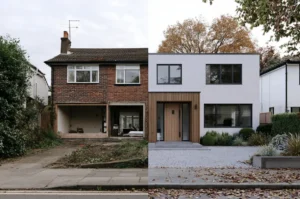
There is a reason warm white exterior paint colors have quietly taken over the street. Stark, blue-white farmhouses had their run, and now they look a little cold next to their neighbors. Homeowners are reaching for something softer — a white that feels lived-in rather than brand-new, one that holds its warmth at dusk instead of going gray.
That shift is where cream comes in. Somewhere between a clean white and a true beige sits a whole family of cream exterior paint colors, and they sit right at the heart of the 2026 exterior paint color trends. On a house, these shades do something a pure white never manages: they catch afternoon sun without glare and settle into shade without turning cold.
I’ve stood in front of a lot of houses at different times of day, watching a “white” turn yellow at noon and gray by evening. The eight shades below are the ones I keep specifying, grouped from the cleanest warm whites down to the creamiest. Read on before you commit a whole facade to a swatch you only saw indoors.
What Makes a Warm White or Cream Different on a House Exterior
A warm white has soft red, yellow, or beige undertones that keep it from looking stark, while a cream leans further into those tones until it reads as a distinct color rather than a white. The line between them is usually the undertone strength and the LRV — Light Reflectance Value, or how much light a color bounces back. Most warm whites sit around an LRV of 82 to 85. Creams usually fall between 74 and 81. Below about 74, you’re into off-white territory, where the color starts to feel like a soft neutral in its own right.
Here is the part swatches never tell you: every one of these colors reads lighter outside than it does on the little card in your hand. Sunlight floods a facade and washes a shade up a notch or two, which is why a cream that looked almost beige indoors can land as a soft warm white on your siding. It’s also why I never trust a chip. I paint a two-foot square on the actual wall and look at it morning, noon, and evening before anyone opens a five-gallon bucket.
The Best Warm White Exterior Paint Colors
The best warm white exterior paint colors keep a home feeling soft and current without tipping into yellow or gray, and two shades do it more reliably than any others. These are the cleaner end of the spectrum — white first, warmth second.

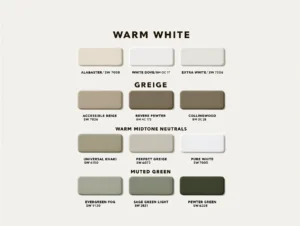
Benjamin Moore White Dove (OC-17)
White Dove is the warm white I reach for when a homeowner wants “just white, but not cold. It has a barely-there gray base and quiet yellow undertones that keep it from ever going buttery, which is exactly why it works on so many styles — Colonial, Cape Cod, farmhouse, new-build. At an LRV of 85, it’s light and luminous, so it stays crisp on trim and gentle on a full facade. On a north-facing Colonial I worked on in a cool, gray-skied town, White Dove held its warmth even under flat winter light, where a lot of whites go dull. It’s the safe answer, and it earns it.

Sherwin-Williams Alabaster (SW 7008)
Alabaster is White Dove’s warmer cousin, and in 2026 it’s the one designers name first. It carries a soft yellow-beige undertone and an LRV of 82, so it reads creamier and a touch richer, especially on a modern farmhouse or a Craftsman with natural wood accents. Alabaster is the shade I suggest when a home needs to feel welcoming from the curb rather than sharp. Pair it with a black or iron-toned trim and the whole facade looks intentional. It’s soft enough to forgive a little dirt, too, which matters more on an exterior than people expect.
The Best Cream Exterior Paint Colors
The best cream exterior paint colors bring genuine warmth to a facade, with visible yellow, beige, or green undertones that read soft and inviting rather than stark. This is where you go when white feels too cool for your brick, your stone, or your light. Creams pair beautifully with warm-toned fixed materials — cream is one of the easiest, most timeless colors that go with red brick — and they hide dust and pollen better than any bright white.

Sherwin-Williams Creamy (SW 7012)
Creamy is a true cream — the one homeowners picture when they say the word. It has honest yellow and beige undertones and an LRV of 81, which keeps it light while still reading unmistakably warm. I’ve watched Creamy pull faintly yellow on a south-facing wall at high noon, then settle back into a soft, inviting cream by late afternoon, so orientation is worth a thought here. It’s a classic paired with black shutters and copper lanterns, and it’s a natural fit on traditional, coastal, and cottage homes where a little glow suits the architecture.

Benjamin Moore Swiss Coffee (OC-45)
Swiss Coffee is the cream for people who aren’t quite sure they want cream. At an LRV of 82 it’s light and soft, with the faintest green undertone that leans warm, so it reads as a gentle off-white indoors and blooms into a mellow cream outside in full sun. Color consultants have quietly made it a go-to over the years, and I understand why — it’s warm without ever announcing itself. On a shingled cottage with weathered wood accents, Swiss Coffee looks like it has always been there. It’s the least risky way to test whether cream is right for your home.

Sherwin-Williams White Duck (SW 7010)
White Duck is a cream that leans greige, which makes it the most grounded shade on this list. Its beige-taupe undertone and lower LRV of 74 give it real depth, so it never looks flimsy against stone or heavy landscaping. This is the one I use when a home sits among a lot of trees or has a busy roofline that needs a calm, earthy body color to settle it down. It pairs especially well with warm wood, olive-green shutters, and matte black hardware. In deep shade it can read more taupe than cream, so it rewards a north-side test patch.

Off-White Exterior Paint Colors That Sit In Between
Off-white exterior paint colors are the middle ground — softer than a true white, cleaner than a cream, with just enough undertone to add character without committing to it. These are quietly some of the most useful shades on a facade, because they flex with the light instead of fighting it.

Benjamin Moore Cloud White (OC-130)
Cloud White is the crisp end of off-white, a clean warm white with a whisper of taupe that keeps it from feeling clinical. At an LRV of 85 it’s bright and fresh, and it’s long been a favorite for trim precisely because it softens the line between siding and window without going stark. On a whole facade it reads a touch cleaner and cooler than White Dove, which suits transitional and modern-traditional homes. If your instinct is white but stark white worries you, Cloud White is a gentle place to land.

Sherwin-Williams Shoji White (SW 7042)
Shoji White is a warm greige off-white that has become a real workhorse. It carries beige and soft gray undertones and an LRV of 74, so it reads creamy in sun and a little more neutral in shade — versatile in a way that stark whites never are. I’ve seen it matched against brick where a brighter white looked harsh, and Shoji White simply calmed the whole wall down. It’s a strong choice for homes that get a lot of direct light, since its lower reflectance keeps glare in check.

Benjamin Moore China White (OC-141)
China White is the moodiest option here, and the one exception to the warmth. Benjamin Moore describes its undertone as cool gray, and at an LRV of 76 it reads as a soft, greige off-white that stays calm and mellow rather than sunny. That cool edge is exactly why it pairs so beautifully with herbaceous green shutters and looks lovely under mature trees. I’ve used it on an older home where a bright white would have felt too new, and China White gave it a soft, slightly storybook character instead. Reach for it when you want quiet depth over glow.

Warm White and Cream House Exterior Color Schemes
The best cream house exterior color schemes pair a warm body color with either a crisp contrast or a natural, tonal accent — there’s no in-between that works as well. Because cream and warm white are soft by nature, the trim and accents do most of the talking, so this is where a facade is won or lost.
Crisp white trim. A clean white like Benjamin Moore Chantilly Lace against a cream body gives you a sharp, classic contrast without ever feeling cold. It’s the most forgiving scheme and the easiest to love on a traditional home.

Black or iron trim. Nothing modernizes a warm white faster than a near-black like Iron Ore or Tricorn Black — the same shades that carry these black house exterior ideas. The high contrast pulls the eye to the architecture and keeps a soft body color from ever looking washed out. This pairing is everywhere on modern farmhouse facades, for good reason.

Warm wood and copper. Natural wood doors, a cedar bracket, or copper lanterns lean into the warmth of a cream and make the whole house feel grounded — though a painted door works just as well, once you know the best front door colors to set against a soft white. This is my favorite move on Craftsman and cottage homes.

Muted green shutters. A soft green like Farrow & Ball Treron sits beautifully against cream and warm white, especially on homes surrounded by planting. The green ties the house to the landscape instead of standing apart from it — and if you’re drawn to it, a whole facade of sage green pairs with the same warm cream trim.

One quiet rule I follow: choose your body color first, then let the roof and any fixed brick or stone guide the trim. A warm cream fights a cool gray roof, and no trim color will fully fix that.
Choosing a Warm White or Cream for Your Climate and Light
For sunny climates and full-sun facades, the best warm white exterior paint colors sit at an LRV of about 82 to 85 — bright enough to feel fresh, soft enough to avoid harsh glare. Push much higher and a white can turn blinding in direct southern sun; a warm white or cream in this range stays comfortable to look at all day.
Orientation changes everything. A south-facing wall gets flooded with warm light, which can nudge a cream toward yellow at midday, so I lean slightly cleaner there — White Dove over Creamy, for instance. A north-facing facade sees cooler, flatter light that can drain warmth out of a shade, so this is where the creamier picks like Alabaster or Creamy earn their place and keep the house from looking gray.
Climate matters as much as compass direction. In hot, sunny regions, a soft warm white reflects heat while dodging the glare of a stark white. In overcast, gray-skied areas, a slightly brighter warm white near an LRV of 85 helps a home look luminous on flat days. And in humid climates, a warm white or cream hides pollen, dust, and the faint gray of early mildew far better than a bright white ever will — one of the most practical reasons these shades hold up.
Which Warm White or Cream Should You Choose?
The right shade comes down to your light, your fixed materials, and how much warmth you actually want. Here’s the short version:
- Pick White Dove if you want the safest warm white that suits almost any style and stays clean in full southern sun.
- Pick Alabaster if you want a designer-favorite warm white with a little more creaminess, especially on a modern farmhouse or Craftsman.
- Pick Creamy if you want an unmistakable, glowing cream and your facade doesn’t bake in midday sun.
- Pick Swiss Coffee if you like the idea of cream but want the lowest-risk way to try it.
- Pick White Duck if your home sits among trees or stone and needs a grounded, greige-leaning warmth.
- Pick Cloud White or Shoji White if you want an off-white that flexes between clean and soft depending on the day.
- Pick China White if you want a cooler, moodier off-white to pair with green shutters or shade.
When a warm white or cream is the wrong call: if your home sits in deep, permanent shade with almost no direct sun, these soft whites can read flat and dingy — a cleaner white serves you better. If your roof or fixed stone is a cool gray, a cream will fight it all day. And if you’re after high-drama, modern contrast, a soft white will always feel too gentle; that’s a job for a deep charcoal or black instead.
Warm White and Cream Exterior Paint Cheat Sheet
Here is every shade above at a glance, with the details that actually change how it looks on a wall.

| White Dove | Benjamin Moore OC-17 | 85 | Soft gray, quiet yellow | You want the safe, any-style warm white |
| Cloud White | Benjamin Moore OC-130 | 85 | Whisper of taupe | You want a crisp, clean-leaning off-white |
| Alabaster | Sherwin-Williams SW 7008 | 82 | Yellow-beige | You want a creamier warm white for farmhouse or Craftsman |
| Swiss Coffee | Benjamin Moore OC-45 | 82 | Faint green, warm | You want the lowest-risk cream |
| Creamy | Sherwin-Williams SW 7012 | 81 | Yellow, beige | You want a true, glowing cream |
| China White | Benjamin Moore OC-141 | 76 | Cool gray, greige | You want a moody off-white for shade or green shutters |
| White Duck | Sherwin-Williams SW 7010 | 74 | Beige-taupe, greige | Your home sits among trees or stone |
| Shoji White | Sherwin-Williams SW 7042 | 74 | Beige, soft gray | You want a versatile shade for full-sun walls |
LRV and undertone values follow current Benjamin Moore and Sherwin-Williams specifications. Always confirm the sample on your own wall before painting.
Frequently Asked Questions
What is the best warm white exterior paint color for 2026?
Sherwin-Williams Alabaster and Benjamin Moore White Dove are two of the most popular warm white exterior paint colors in 2026. Alabaster reads slightly creamier and suits modern farmhouse and Craftsman homes, while White Dove is a touch cleaner and works on nearly any style. Both stay soft without tipping into yellow or gray, which is why designers keep returning to them.
Is cream or warm white better for a house exterior?
It depends on your fixed materials and your light. Cream works best with warm brick, stone, and wood, and on homes that get cooler, north-facing light where extra warmth is welcome. Warm white suits full-sun and south-facing facades, where a creamier shade can drift toward yellow at midday. When in doubt, a warm white is the more flexible starting point.
Do warm white and cream exteriors show dirt quickly?
Warm white and cream exteriors hide dirt better than bright, pure whites, because their soft undertones mask pollen, dust, and the faint gray of early mildew. A stark white shows grime the fastest. Choosing a satin or semi-gloss finish and giving the siding a rinse each spring keeps them looking fresh.
What sheen is best for a warm white or cream exterior?
Satin is the best all-around sheen for a warm white or cream body, since it holds up to weather and cleans easily without looking shiny. Trim and doors usually look sharpest in semi-gloss, which adds a subtle depth and makes them stand out against the softer siding. Using the same flat sheen everywhere tends to make a facade look lifeless.
Does a warm white or cream exterior add resale value?
Warm white and off-white exteriors are among the most broadly appealing exterior colors, which helps a home show well from the curb and photograph cleanly in a listing. A soft, neutral facade rarely turns a buyer away, and that wide appeal is what supports value — far more than any single trendy color ever could.
The Bottom Line
Warm white and cream are having their moment because they solve the one problem stark white never could — they stay warm as the light changes. Whether you land on the clean softness of White Dove, the creamy welcome of Alabaster, or the grounded depth of White Duck, the shade is only the starting point. Match it to the way your walls catch the light, pick a trim that gives it some backbone, and test it on the actual wall — do that, and the facade will look right in every season.