 Skip to content


The mold didn’t start with my sofa — it started with my neighbor. The unit next door ran its air conditioning around the clock, which quietly turned our shared wall cold. My side stayed warm and humid, and every night that damp air met that cold wall and left water behind it. Within a season, the back of my sofa and the wall behind it had bloomed with mold. I’d arranged the room exactly the way the design magazines said to — furniture pushed flat against the walls — and that was the whole problem.
So I stopped fighting my climate and started designing with it. The surprise was that it didn’t cost me any style — the choices that make a small living room feel open and breezy turned out to be the same ones that keep it dry.
That’s what this list is: 25 small apartment living room ideas for humid climates. The best ones pair space-saving design with moisture-smart choices — furniture floated off the walls so air can move, leggy open-base pieces that ventilate underneath, breathable materials like linen, rattan, and performance fabric, and washable textiles that dry fast. Almost every idea below does double duty: it looks good and it helps your room breathe. I’ll point out that second benefit as we go, so you’re never just decorating blindly — you’re designing a small space that actually lasts in the heat.
New to designing for humidity? Start anywhere — but if you want the fastest wins, begin with the layout and airflow ideas. They cost the least and make the biggest difference.
Smart Layouts for a Small, Humid Room
How you arrange a small living room matters even more in a humid climate than what you put in it. The goal is simple: keep air moving, and never trap it in a still pocket behind or under your furniture — because still, warm air against a cool surface is exactly where mold begins. The good news is that the layouts that keep air flowing are also the ones that make a small apartment feel bigger and more welcoming. These first small apartment living room ideas set the foundation for everything else.
1. Float the sofa off the wall
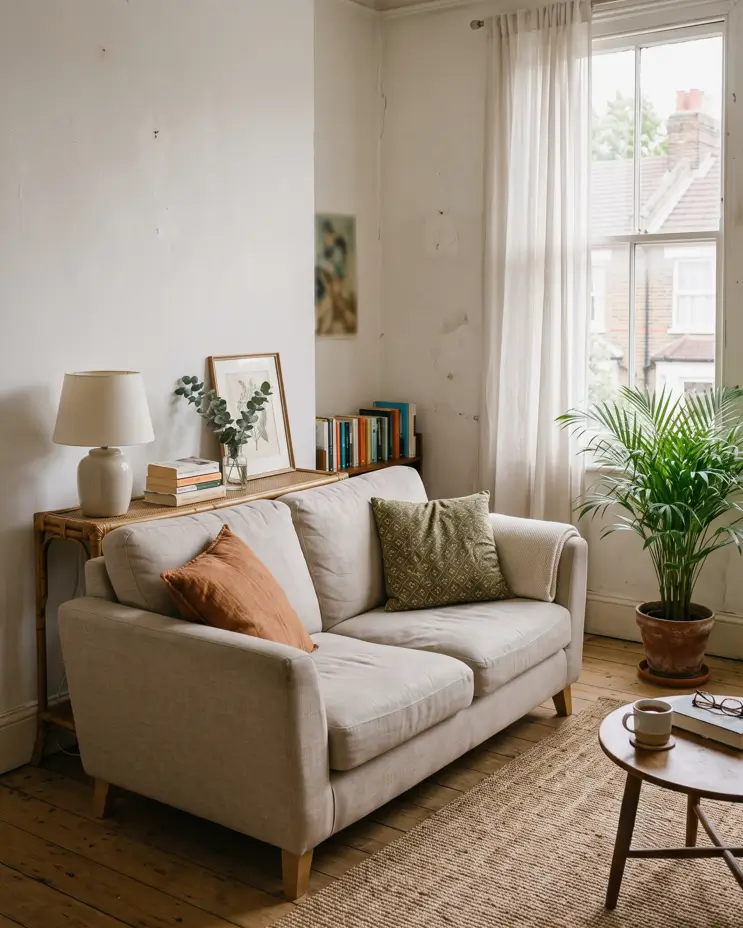
Pull your sofa a few centimeters away from the wall instead of pushing it flat against it. It makes the layout feel intentional and lounge-like rather than cramped, and the gap lets air circulate behind the sofa so damp never settles against the wall — the exact spot where mold usually starts. Slip a slim console into the gap and it becomes a styling feature, not wasted space.
2. Keep a clear airflow path from window to door
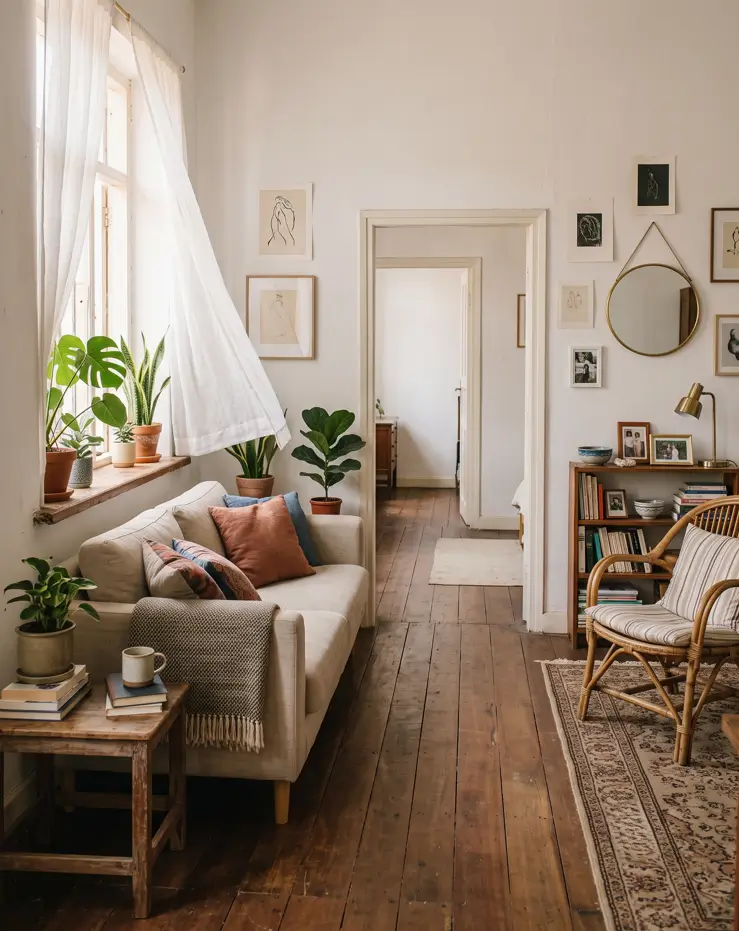
Arrange furniture so there’s an unbroken channel between your main window and the door — never block that line with a tall sofa back or a bulky shelf. The room stays open and walkable, and the cross-breeze actually moves through instead of dying against a wall, giving you the cheapest natural defense against humidity there is.
3. Float the arrangement toward the room’s center
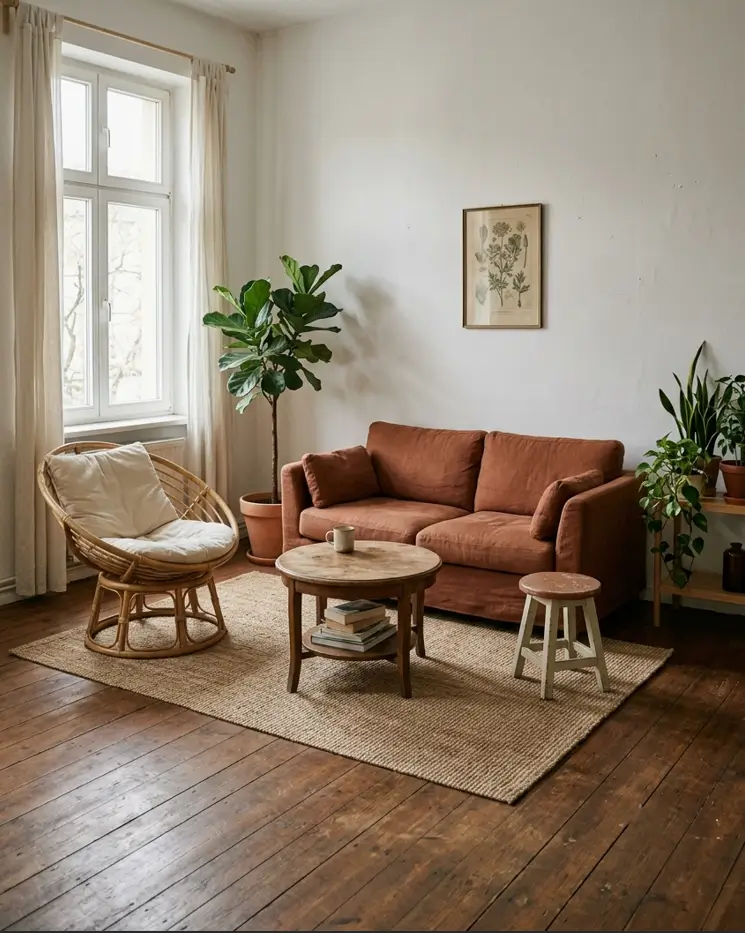
Group your seating slightly inward instead of hugging the walls. Counterintuitive in a small space, but it creates a defined, intentional lounge and leaves a breathing gap around the edges — which keeps upholstery off cool exterior and shared walls (the ones chilled by a neighbor’s AC), so condensation never soaks into your fabric.
4. Zone the space with a flatweave rug
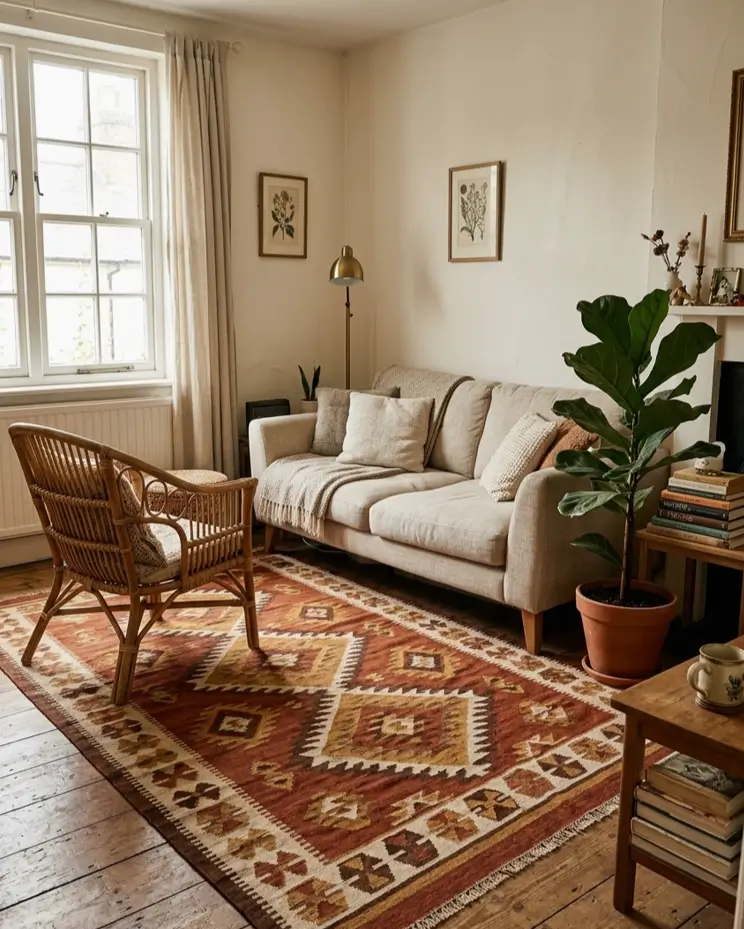
Define your living area with a low, flatweave rug that anchors the furniture without swallowing the floor. It tells the eye “this is the living zone,” making an open or studio layout feel organized and larger. Flatweave matters here: unlike thick pile, it dries fast and won’t hold the damp that turns rugs musty. Float the front legs of your seating onto the rug to tie the grouping together.
5. Keep the room open and uncluttered
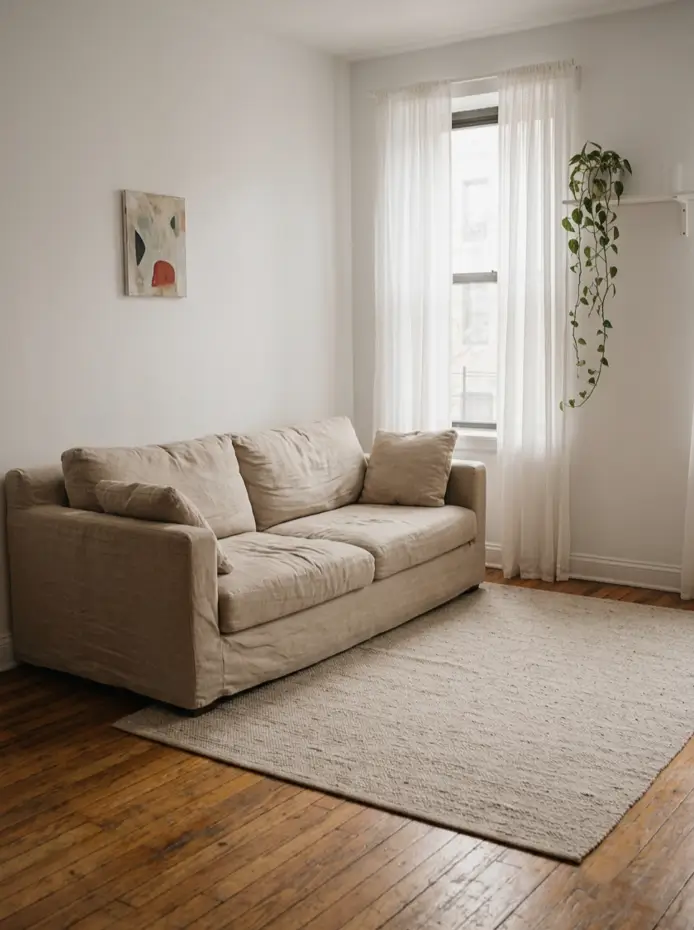
Leave a little more open floor than you think you should. Resist packing every corner — open floor and clear surfaces let air move freely and keep a small space feeling calm and larger. In a humid climate, empty space is airflow space, so the room that looks the most serene is also the one that stays the freshest.
Furniture That Breathes
In a small, humid room, the shape of your furniture is quietly doing a job. Pieces that sit up on legs let air flow underneath instead of trapping damp against the floor. Open frames and light silhouettes keep your sightlines clear so the space feels roomier — and let a breeze pass right through. Think of every piece here as furniture that lets your living room exhale.
6. The leggy linen sofa
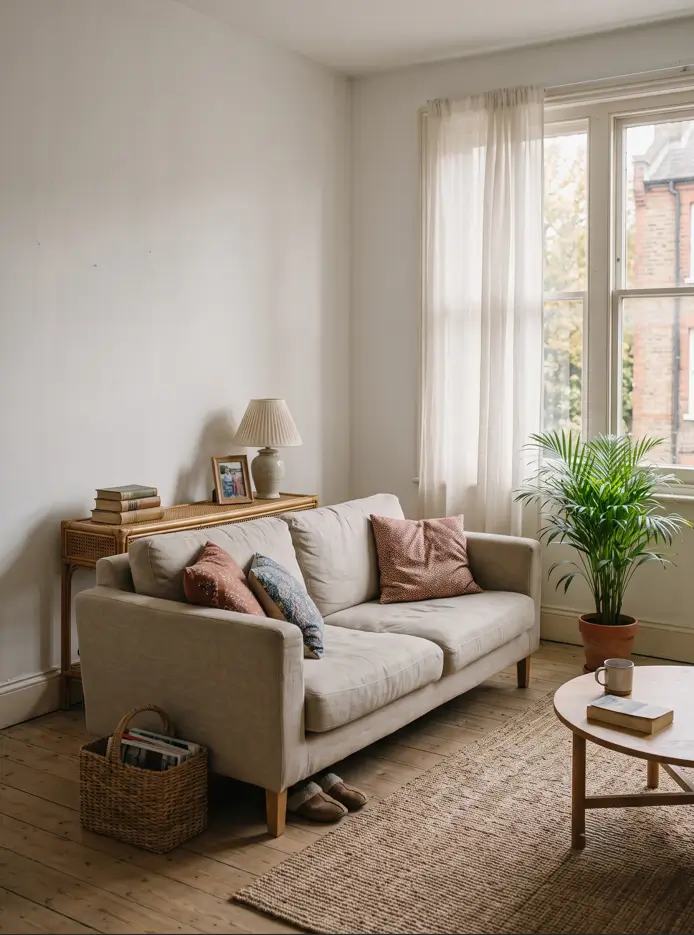
Make a slim sofa on tall wooden legs the anchor of your room. Linen’s relaxed drape looks effortlessly elegant in a small space, and the raised legs keep the piece light so the floor shows through. The humid-climate payoff is built in: linen breathes and dries quickly, while the open base lets air sweep underneath instead of trapping damp against the floor. Choose a removable, washable cover so you can air it out on dry days.
7. A rattan or cane accent chair
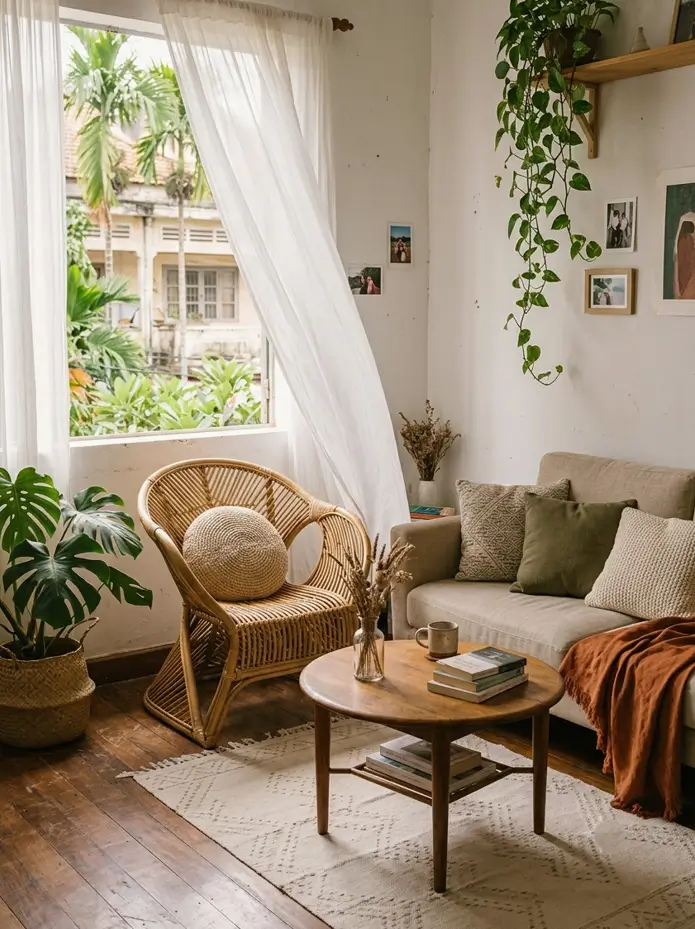
Add one rattan or cane chair as the character piece of the room. It brings that warm, woven, tropical texture everyone wants right now, and its light frame keeps a small space from feeling heavy. The quiet genius: the open weave lets air pass straight through the furniture itself, so it never holds moisture the way a solid upholstered chair does — exactly why tropical homes have used rattan for generations.
8. Pull in a second woven seat for flexible seating
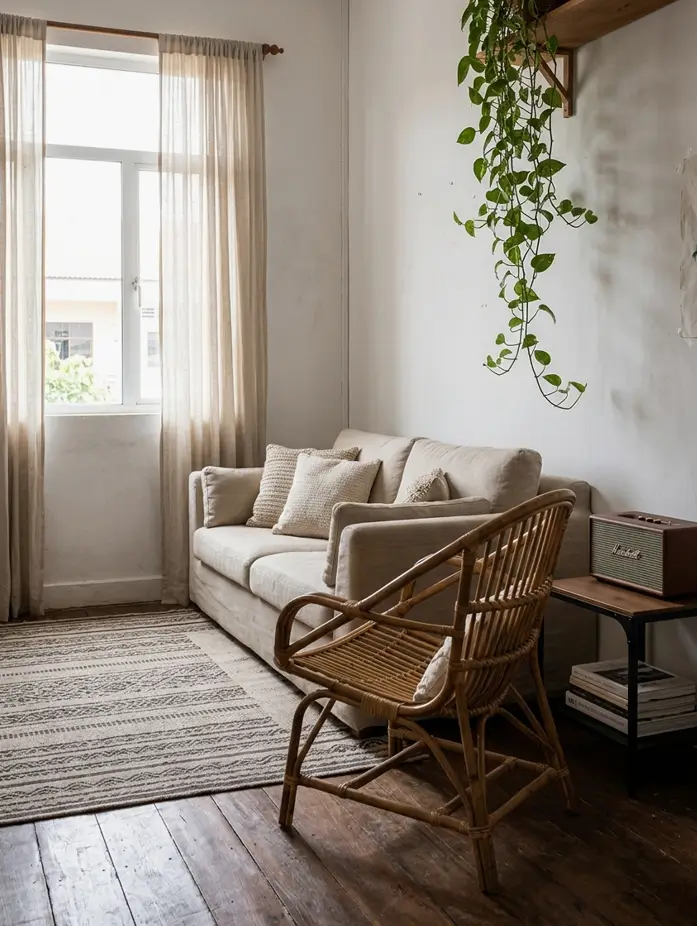
When you need more seating in a small room, reach for another light, woven chair rather than a second bulky armchair. It’s easy to move, tuck away, or carry to another room, and its airy frame keeps the space feeling open. Movable seating also means you can shift it to air out any corner that feels damp.
9. Style a cozy corner by the window
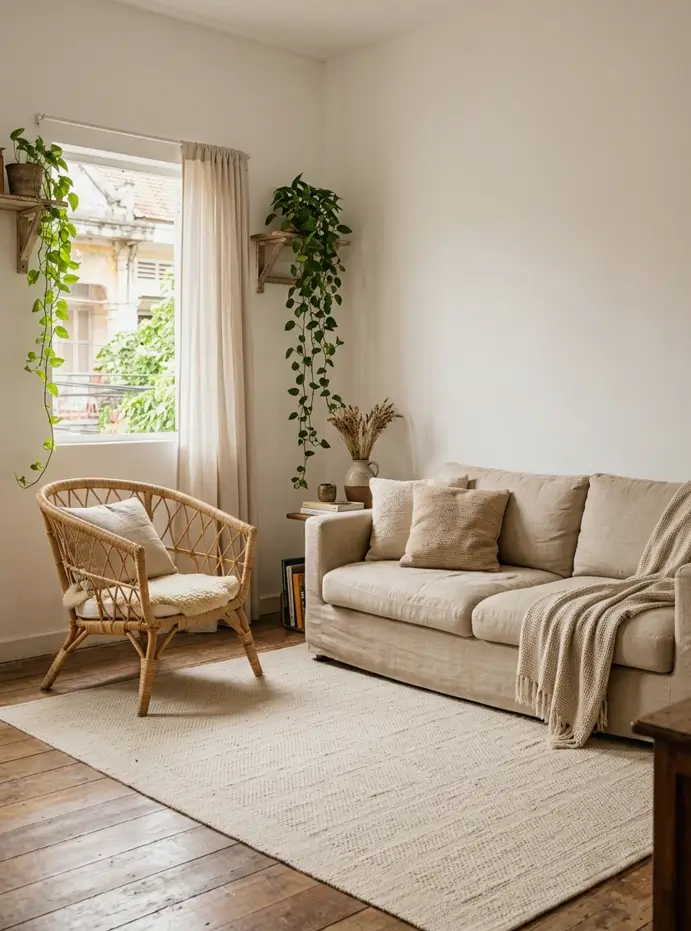
Turn a small nook into a cozy corner with a comfortable chair set near the window and light. It gives a tiny apartment a sense of purpose and calm, and placing the seat by the window means it catches the breeze and dries out rather than sitting in a still, shaded pocket. A trailing plant and a small stack of books finish it without clutter.
10. Choose a green velvet piece for an air-conditioned corner
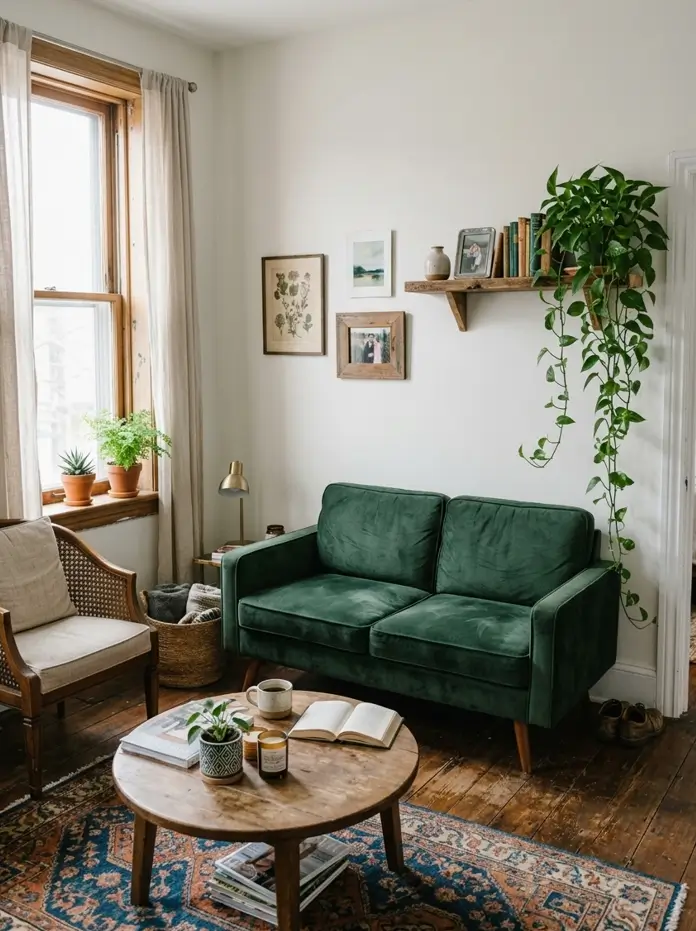
If you love a rich, moody velvet, put it where the air stays dry — a corner you air-condition most of the day. A deep green loveseat brings color and character a beige room can’t, and paired with a cane chair and trailing plants it feels lush and intentional. Just keep velvet out of the most humid, unventilated spots, where dense fabric holds damp.
11. A round, leggy coffee table
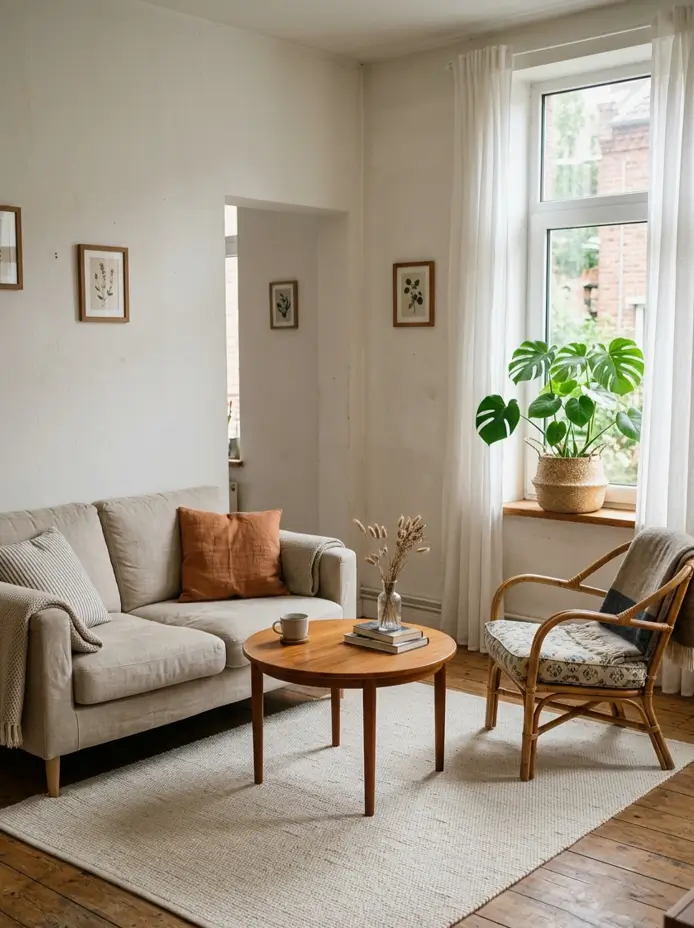
Swap a boxy coffee table for a round or oval one on slim legs. Curves soften a small room and keep walkways clear, so foot traffic — and air — flows around it instead of hitting hard corners. The open base keeps sightlines low and the floor visible, making the room feel more spacious while air moves freely beneath. Choose teak or a sealed hardwood, which shrugs off humidity where cheap MDF would swell.
The Best Materials & Fabrics for Humidity
This is the section that saves you money. The wrong sofa fabric or the wrong wood can look perfect in the store and fall apart within two rainy seasons — I learned that the expensive way. Humid air soaks into absorbent materials, and warmth lets mildew take hold. So the trick is choosing materials that either don’t absorb moisture or dry out quickly when they do. Here’s what actually lasts in a tropical apartment.
12. Upholster in performance or breathable fabric
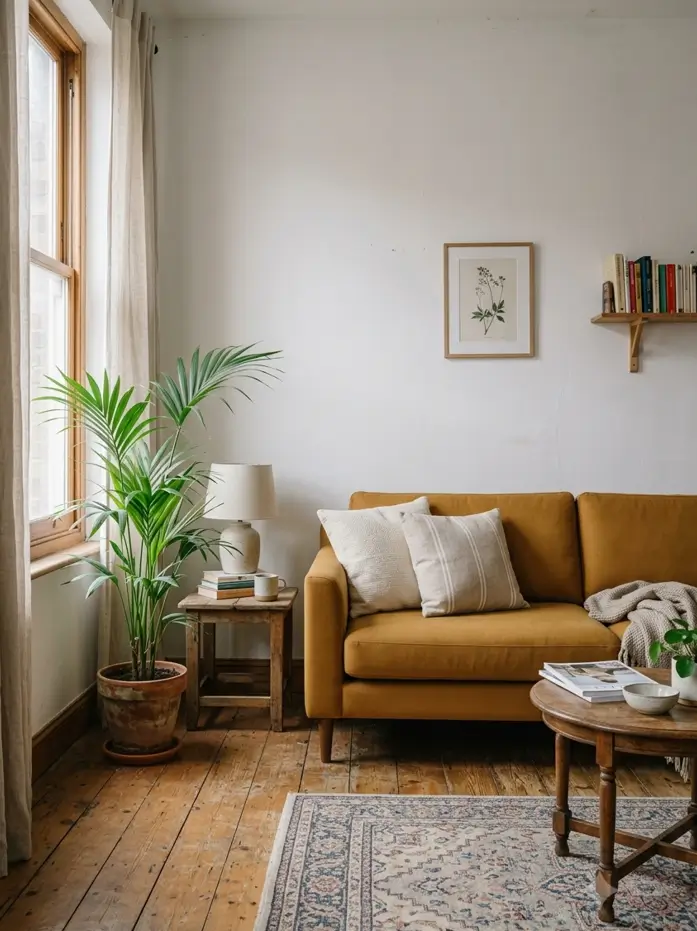
Choose a sofa or chairs in fabric made to handle heat and damp — performance weaves, or breathable naturals like linen. A warm mustard sofa proves the point: it brings real color while a tight, breathable weave shrugs off the moisture that ruins ordinary fabric. Spills wipe away, and it dries fast instead of holding damp against the foam underneath.
13. Add a top-grain leather piece
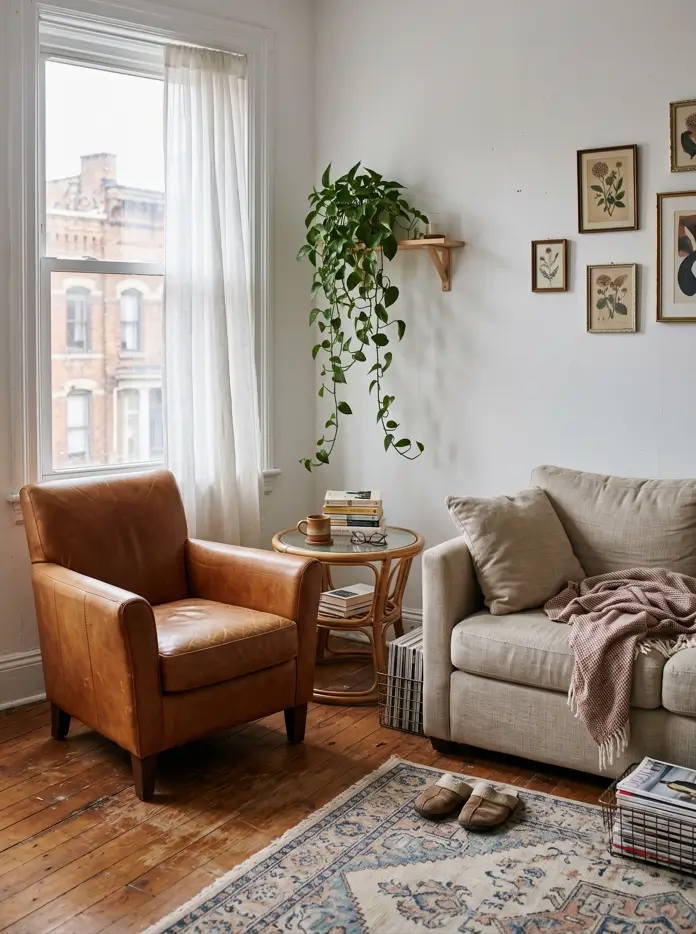
Bring in one leather chair or sofa in genuine top-grain leather. It adds warmth and a timeless, characterful look that suits a cozy apartment — and practically, leather doesn’t absorb moisture and wipes clean in seconds, so mildew never takes hold. The one rule: choose real top-grain, not bonded or PVC “faux leather,” which traps heat and peels in humidity.
14. Layer moisture-friendly cushion covers
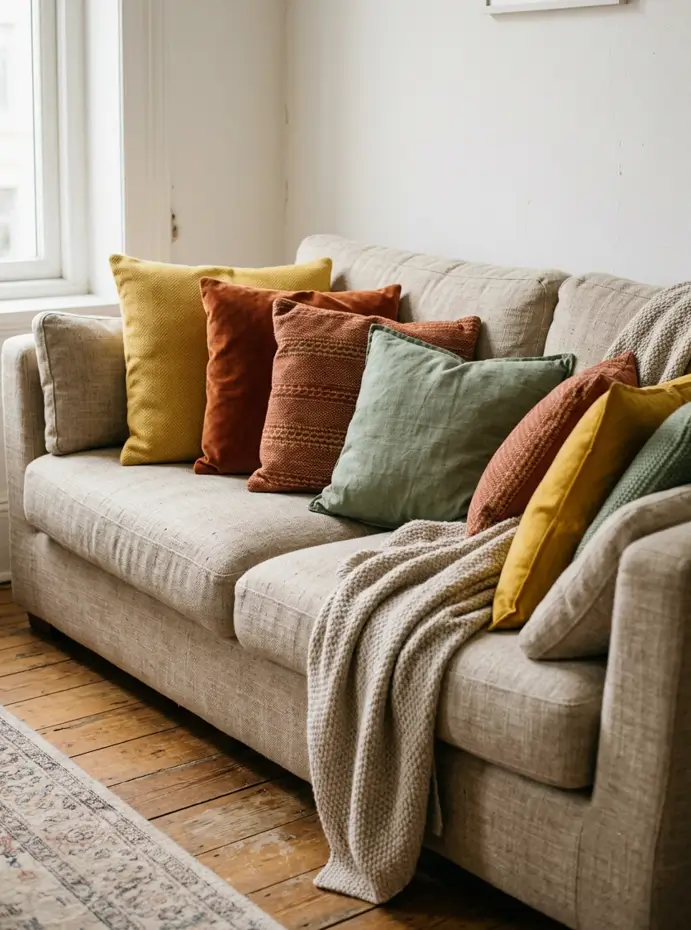
Refresh your sofa with cushion covers in fabrics that shrug off damp — solution-dyed synthetics, linen blends, or textured cotton with a tight weave. They read as soft, colorful textiles but stay fresh through the humid months far better than heavy, plush covers. Because covers are cheap and removable, this is the easiest upgrade on the whole list — swap them seasonally with zero commitment.
15. Choose teak and solid wood over MDF
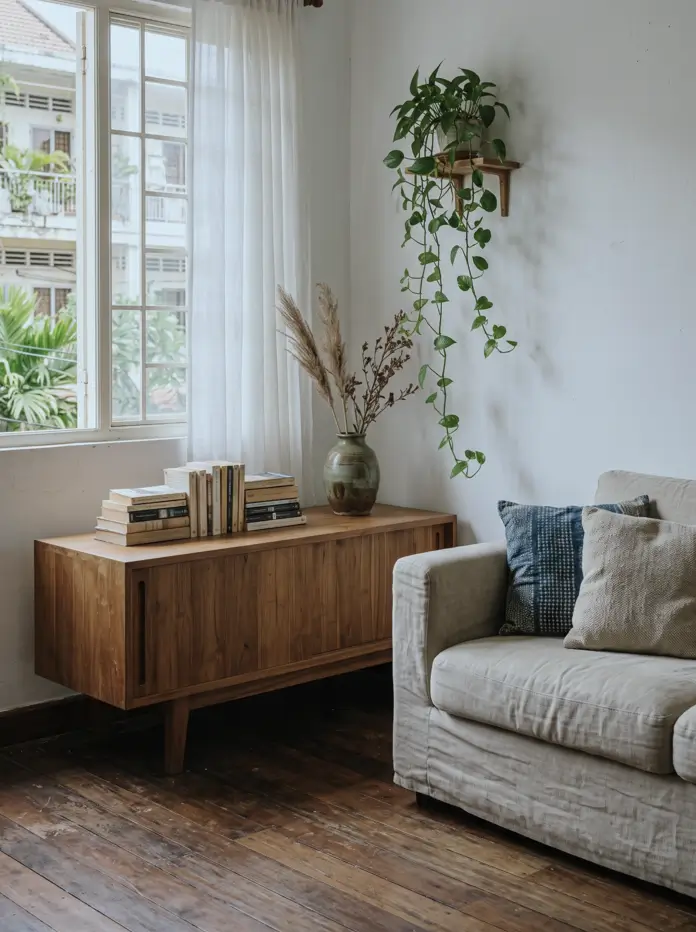
When you buy wood furniture — a console, a shelf, a coffee table — reach for teak, sealed hardwood, or rattan rather than MDF or cheap laminate. Solid tropical woods have natural oils that repel moisture and simply look richer in a cozy room, while MDF is compressed wood dust and glue — the two things humidity attacks first. It swells and warps within a season or two. Spend a little more once, instead of replacing it every year.
16. Keep removable, washable covers on everything soft
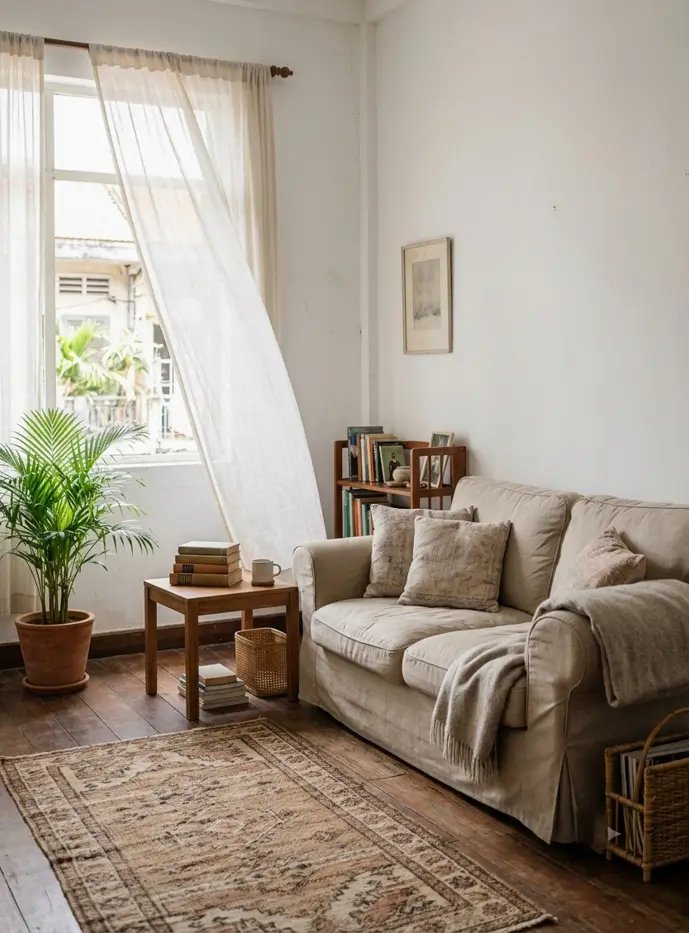
Wherever you can, choose sofas, cushions, and chairs with covers you can unzip and wash. In a humid climate this is the difference between airing out a musty smell and living with it — strip the covers, wash away any mildew starting to form, and dry them in the sun. It’s a small buying decision that keeps every soft surface fresh through rainy season after rainy season.
Quick fabric guide for humid living rooms:
| Thrives in humidity | Use with caution |
|---|---|
| Linen and linen blends — breathable, dry fast | Velvet — dense, holds damp (AC rooms only) |
| Performance fabric — treated to resist mildew | Bouclé — beautiful but traps moisture |
| Top-grain leather — wipes clean, doesn’t absorb | Untreated cotton — mildew-prone without a finish |
| Rattan and cane — open weave, air flows through | Suede — stains and holds moisture easily |
| Solution-dyed synthetics — moisture-resistant | Faux/PVC leather — traps heat, peels in humidity |
Textiles, Rugs & Windows That Dry Fast
Soft textures make a living room feel like home — but in a humid climate, the wrong ones hold damp for days and start to smell. The rule here is easy: keep it light, keep it washable, and let it dry fast. Thin, breathable textiles give you all the softness and none of the mustiness. Your windows matter too, since they’re your best natural tool for moving air and light through the room.
17. Hang sheer linen or cotton curtains
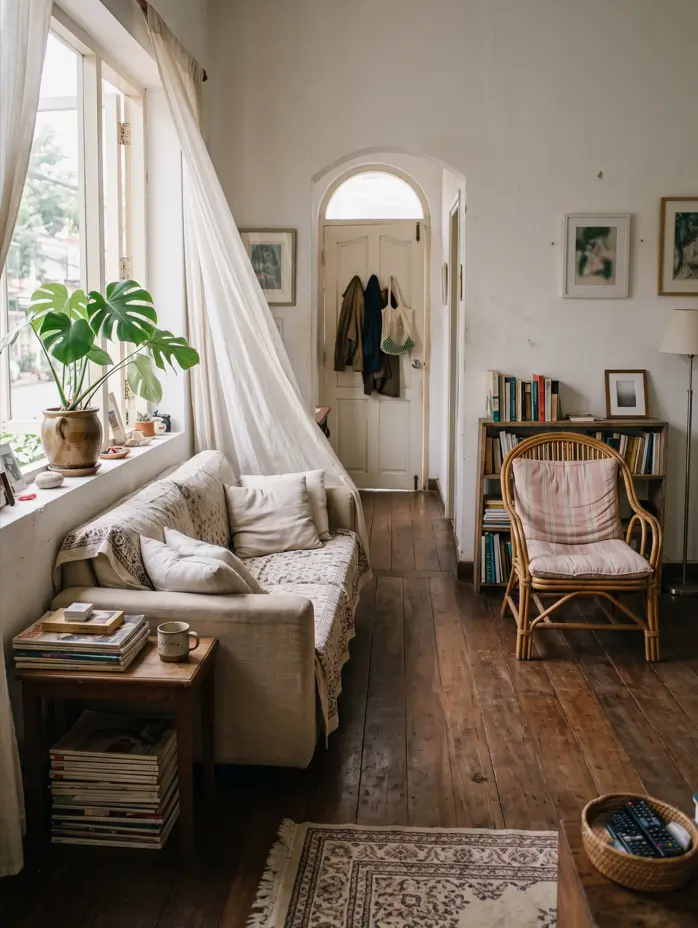
Dress your windows in light, sheer curtains instead of heavy drapes. They soften the light beautifully and add that airy, relaxed look a cozy apartment thrives on — while letting a breeze pass right through instead of blocking it. Thin cotton or linen sheers also dry within hours if they get damp, where thick blackout curtains would trap moisture and turn musty. Let them billow; that movement is air doing its job.
18. Layer a flatweave rug instead of thick pile
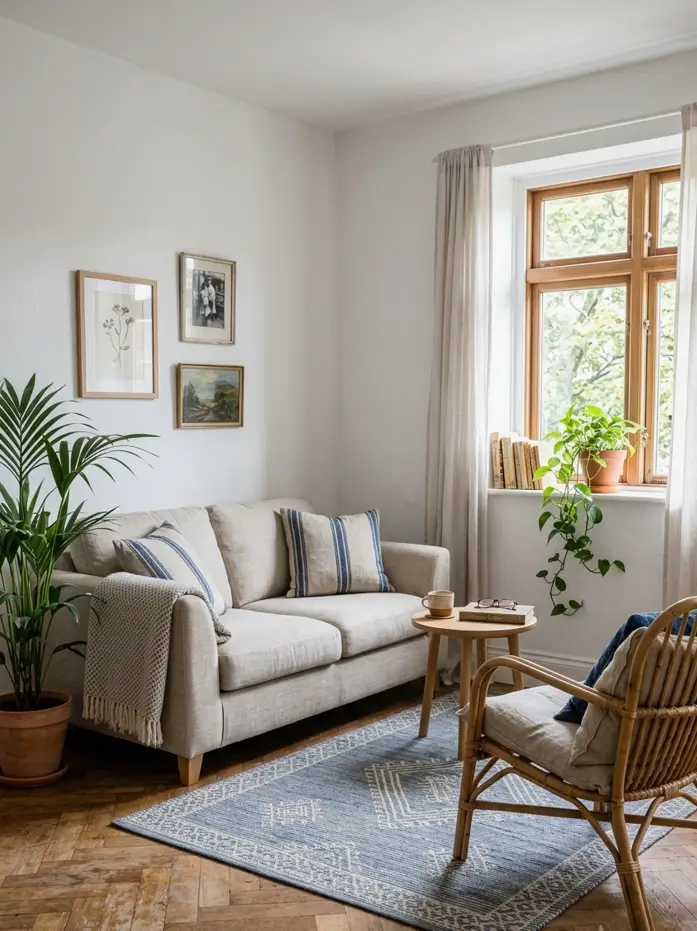
Ground the room with a low flatweave rug — cotton, jute, or a flat weave — rather than a plush, high-pile one. It gives you softness and warmth underfoot and defines the space, but its thin weave dries fast and airs out easily instead of holding the damp and dust that make thick rugs smell in humid air. Bonus: flatweave rugs are light, so you can lift and sun them on dry days.
19. Add colour with a patterned flatweave
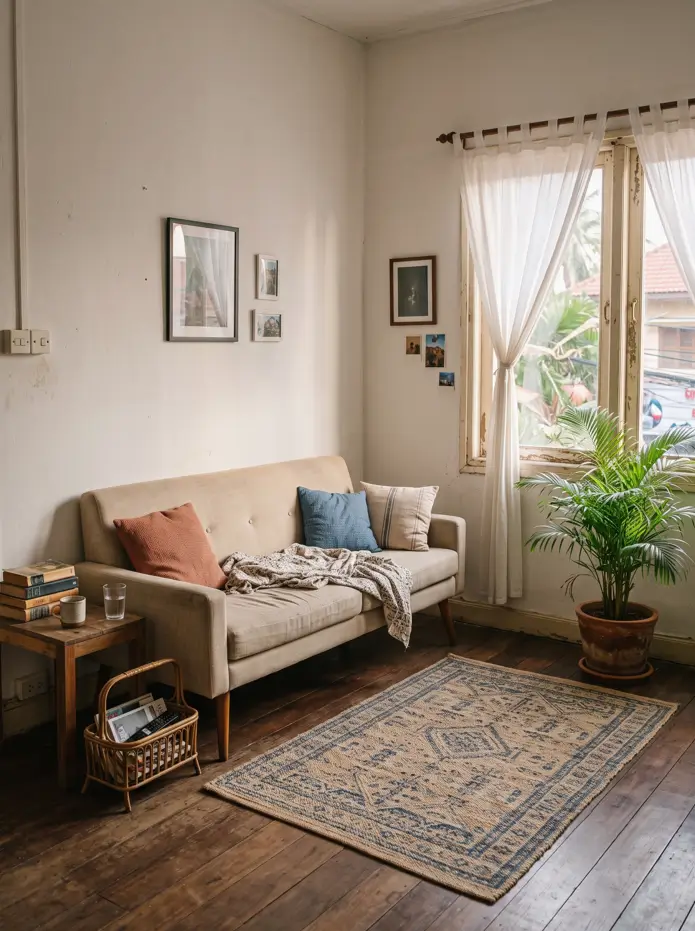
A patterned flatweave — a blue or kilim design — brings personality to a small room without adding bulk. The flat weave still dries fast and airs out between humid days, so you get colour and character with none of the damp-trapping downside of thick pile. It also hides everyday dust better than a plain pale rug.
20. Keep throws and cushions light and washable
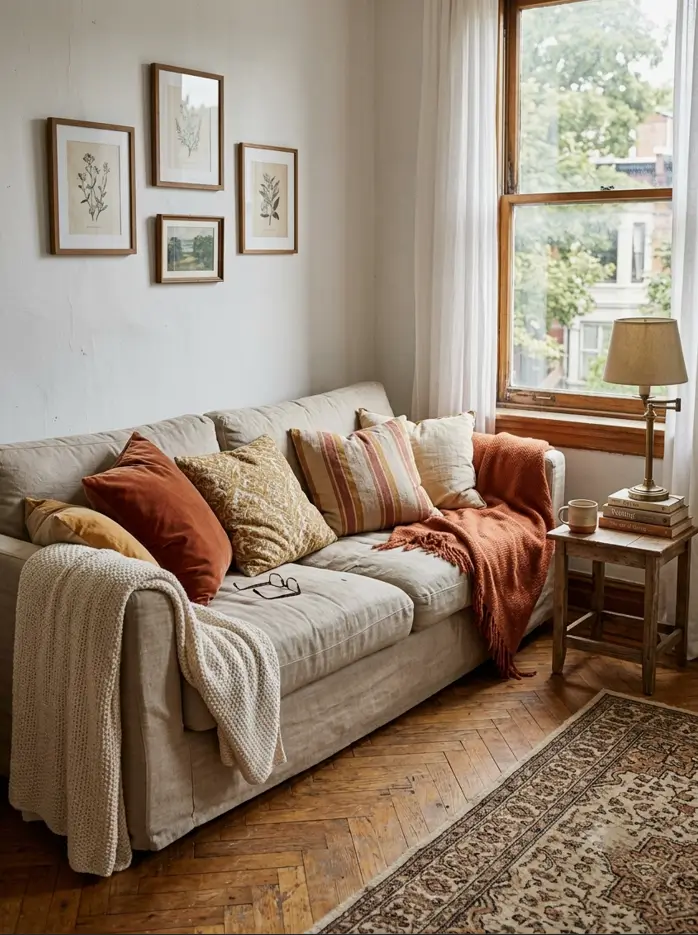
Style your sofa with a few lightweight, washable throws and cushion covers rather than heavy knits or dense fillings. Light layers give you that inviting, collected look while staying easy to toss in the wash and dry in the sun — so nothing sits absorbing moisture for weeks. Swap them out to refresh the room’s mood without buying anything big.
21. Open the window for cross-ventilation
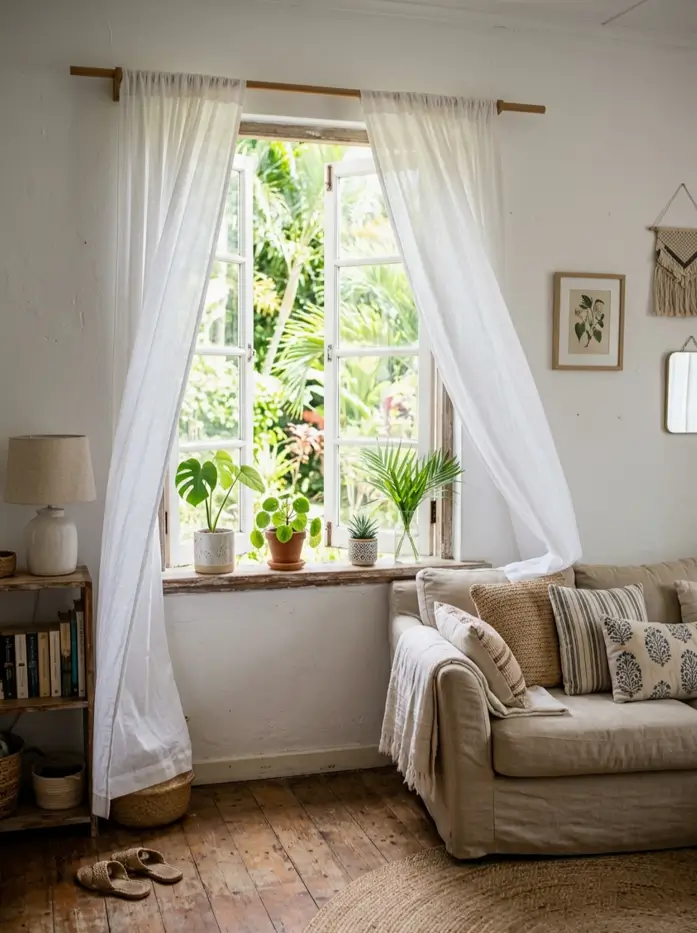
Treat your window as a design feature, not just a light source — and actually use it. Position furniture so you can open it easily and let air flow across the room, pairing it with an opposite opening or door where you can. A styled sill with a small plant or two frames the view and reminds you to keep it open; that daily airflow is the simplest, cheapest way to keep humidity and mold at bay.
Plants & Greenery That Love Humidity
This last group is where humidity stops being the enemy. The right plants love the moisture that ruins your furniture — so instead of fighting your climate, you decorate with it. Greenery also softens a small room, draws the eye up, and brings that lush tropical life a cozy space craves. Just keep pots off the floor and away from cool walls so the soil dries properly.
22. Choose humidity-loving plants
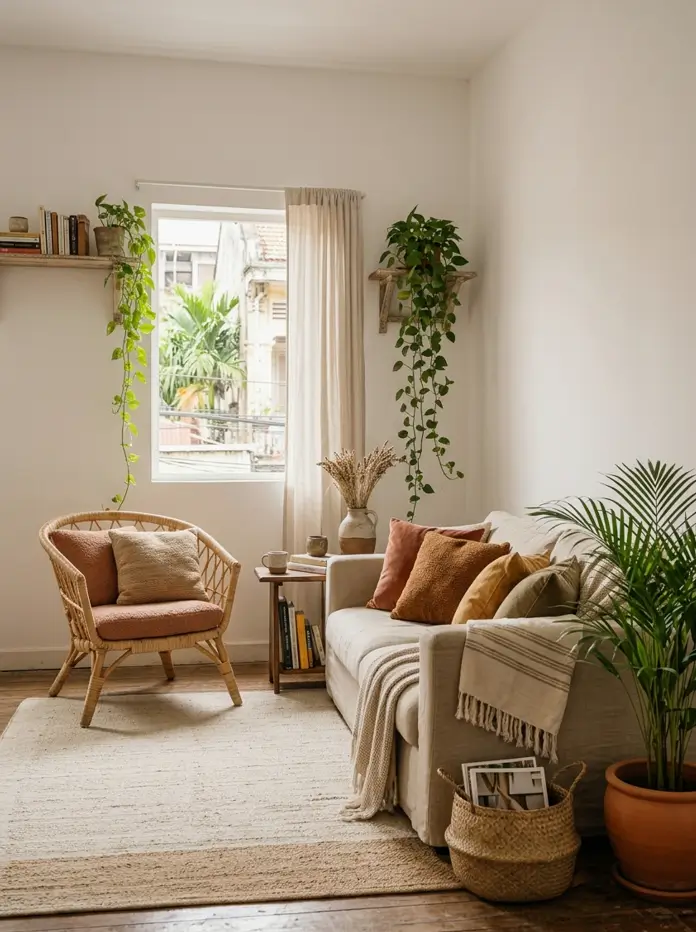
Fill a corner with plants that actually thrive in humid air — pothos, monstera, ferns, or a peace lily. They flourish in the moisture that would ruin your furniture, and they bring that lush, tropical life a cozy room craves. Keep them in breathable woven baskets and let them trail from a shelf to draw the eye up.
23. Let trailing plants climb the walls
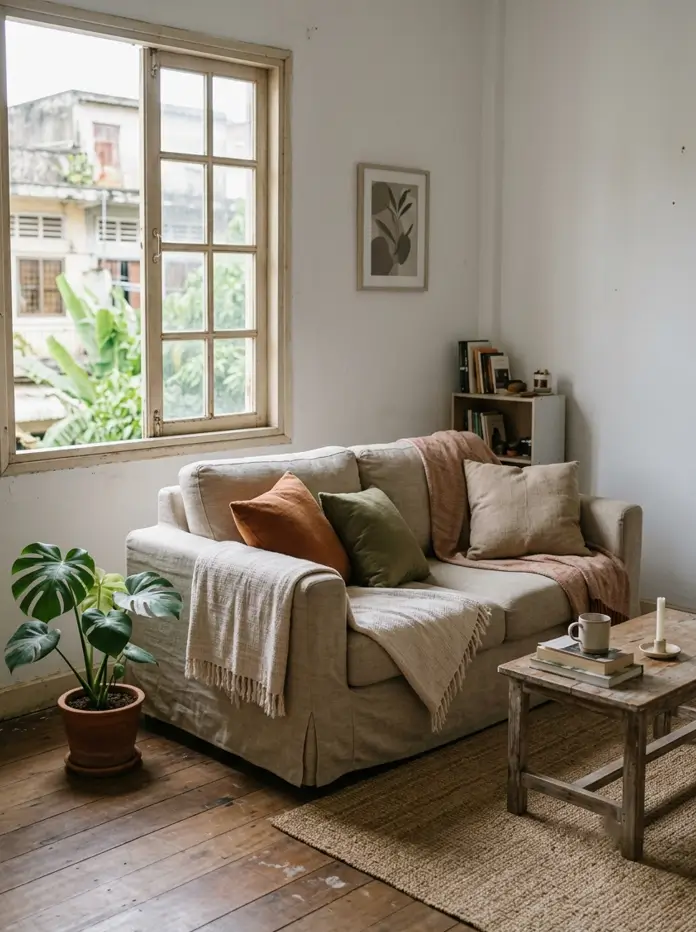
Use trailing plants like pothos on high shelves or wall hooks to bring greenery up the walls without using any floor space — perfect for a small room. Cascading vines soften bare walls and add that lush tropical feel, while keeping the plants up high where air moves freely around them and the leaves dry quickly between waterings.
24. Raise plants off the floor and away from walls
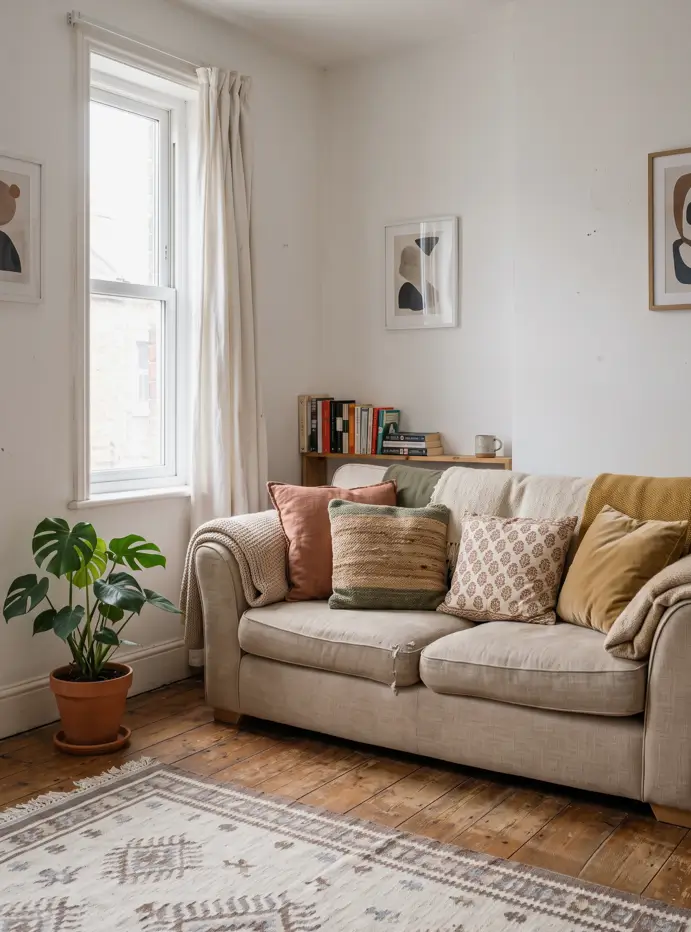
Set your plants on stands, stools, or hanging hooks rather than clustering pots directly on the floor against a wall. Elevated greenery looks more styled in a small room, and practically it keeps damp soil and pot bases from sitting against surfaces where moisture and mildew collect. Air circulates around each plant, they dry properly between waterings, and your floor and walls stay dry.
25. Style plants on the windowsill for light and airflow
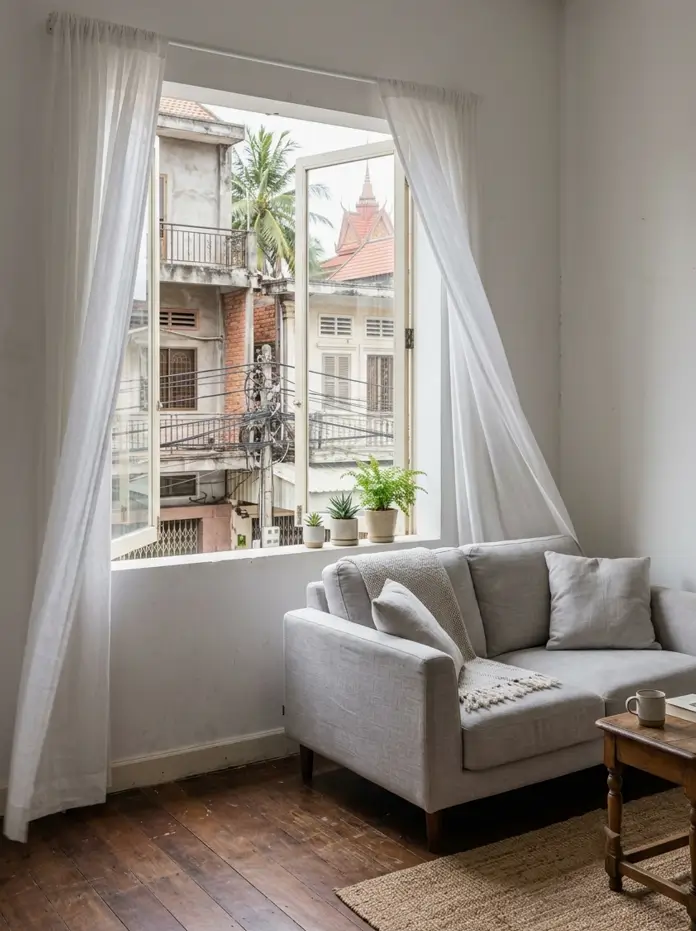
Line a sunny sill with a few small potted plants. They catch the best light, sit right in the path of any breeze so their leaves and soil dry quickly, and they frame the window like living décor. In a small room, using the sill for greenery keeps your limited floor space open and airy.
5 Mistakes That Make a Humid Living Room Worse
Even a beautiful room can quietly work against you if it makes these common missteps. I’ve made most of them myself — here’s how to spot and fix each one.
1. Pushing furniture flat against the walls. It feels space-saving, but it creates a still, damp pocket where mold thrives — especially on cool or shared walls. Leave even a few centimeters of breathing room behind large pieces so air can circulate.
2. Falling for dense, trendy fabrics. Velvet and bouclé look gorgeous online, but in a warm, humid room they hold moisture against their backing and turn musty. Save them for spaces you air-condition most of the day, and reach for linen, leather, or performance fabric everywhere else.
3. Choosing MDF and cheap laminate furniture. These are made of compressed wood and glue — the two things humidity attacks first. They swell and warp within a season or two. Solid sealed woods, teak, and rattan cost a little more and last far longer.
4. Layering thick rugs and heavy drapes. Dense pile and heavy fabric trap damp and dust, which is a recipe for smell and mildew. Flat, washable rugs and light, breezy curtains give you softness that actually dries out between humid days.
5. Relying on air conditioning alone. AC pulls some moisture from the air, but on its own it leaves still, cool pockets where condensation forms. Pair it with good cross-ventilation so the whole room keeps moving.
Frequently Asked Questions
Why is one wall in my apartment always damp or moldy when the rest of the room is fine?
That wall is probably cold on the other side — often from a neighbor’s air conditioning or an exterior-facing surface. Warm, humid air in your room condenses into water when it meets that cooler wall, especially behind furniture where air can’t move. Pull large pieces a few centimeters off that wall, improve airflow with a fan, and the damp usually clears.
Can velvet or bouclé survive a humid climate?
Only in a room that stays air-conditioned most of the day. Velvet and bouclé are dense, absorbent fabrics that hold moisture against their backing, which invites mildew and a musty smell in warm, damp air. In a naturally ventilated living room, choose linen blends, performance fabric, or top-grain leather instead.
What indoor humidity level protects my furniture?
Aim to keep indoor humidity below about 60% — the level the U.S. EPA identifies as the threshold where mold begins to grow, with 30–50% being ideal. Above that, fabrics absorb moisture, foam stays damp, and wooden frames can swell or warp. A dehumidifier, good cross-ventilation, or a fan running through the day all help hold the room under that line.
Is leather a good sofa choice for tropical weather?
Top-grain leather works well because it doesn’t absorb moisture and wipes clean in seconds. The one tradeoff is that leather can feel warm against bare skin in a room you don’t cool, so it suits spaces you air-condition at least part of the day. Avoid bonded or PVC “faux leather,” which traps heat and peels in humidity.
What flooring is best for a humid living room?
Sealed tile and treated hardwood handle humidity far better than laminate, which can swell and lift at the seams. Whatever the floor, top it with a flat, washable rug rather than thick pile — dense fibers hold damp and dust for days, while flatweave dries fast and airs out easily.
How do I keep the room comfortable without running the AC all day?
Move air instead of only cooling it. Cross-ventilation and a breeze from an open window make a warm room feel several degrees cooler and prevent the stagnant pockets where damp and mold settle. Breathable materials like rattan, linen, and open-weave furniture stay comfortable to the touch even when the room is warm.
A last thought
You don’t have to choose between a living room that looks good and one that survives your climate. Once I stopped copying rooms built for dry, cool weather and started designing for the air I actually live in, my space got better — lighter, airier, easier to keep fresh. These small apartment living room ideas are each a small step in that direction. Start with one, see how the room breathes, and build from there.
